Practical guidance for planning asbestos work.
Asbestos work can involve different legal duties, work categories and control measures. This advice centre explains common terms and project stages in plain English, with links to the relevant Hintons services and official HSE guidance.
The correct approach always depends on the asbestos-containing material, its condition, the task being carried out and the circumstances on site. If you already have an asbestos survey, photographs, drawings or a specification, send them to our estimating team and we can review the information relevant to your enquiry.
Licensed removal
Higher-risk asbestos work requiring an HSE-licensed contractor.
LICENSED ASBESTOS REMOVAL →Non-licensed removal
Planned removal of suitable lower-risk asbestos-containing materials.
NON-LICENSED ASBESTOS REMOVAL →Asbestos surveys
Survey information for management, refurbishment and demolition planning.
ASBESTOS SURVEYS →Encapsulation
Managing suitable asbestos-containing materials in place where appropriate.
ASBESTOS ENCAPSULATION →Advice should match the actual material and task.
General website information cannot replace a project-specific assessment. Where the work category is uncertain, the asbestos survey, material condition and proposed method should be reviewed before work begins.
Asbestos questions answered
These answers are written for Great Britain and use current HSE terminology. Regulations and guidance can change, so official HSE information should be checked where a legal duty or work classification is being decided.
Does all asbestos have to be removed?
No. Asbestos-containing materials do not always have to be removed simply because they are present. Material that is in good condition, unlikely to be disturbed and capable of being managed safely may sometimes remain in place. Removal can be appropriate where material is damaged, deteriorating or likely to be disturbed by planned work.
What asbestos work requires an HSE-licensed contractor?
Most higher-risk work with asbestos requires an HSE-licensed contractor. This includes work on sprayed asbestos coatings, loose-fill insulation and asbestos lagging, together with higher-risk work on asbestos insulating board or other asbestos insulation. The correct work category depends on the material, its condition, the task and likely exposure, so each project should be assessed properly.
Is asbestos insulating board (AIB) always licensed work?
No. The work category depends on the task, condition of the material, duration and likely fibre release. Some short-duration maintenance work can be non-licensed or notifiable non-licensed work, while more substantial or higher-risk AIB work normally requires a licensed contractor. The proposed work should be assessed before it starts.
What is the difference between licensed and non-licensed asbestos work?
Licensed work covers higher-risk asbestos activities for which an HSE asbestos licence is required. Non-licensed work covers certain lower-risk activities where the licensing requirement does not apply. Non-licensed does not mean risk-free: the work still requires a suitable assessment, competent people, an appropriate method and effective controls. Some work also falls into the separate category of notifiable non-licensed work.
What is notifiable non-licensed work (NNLW)?
NNLW is asbestos work that does not require an HSE asbestos-removal licence but is subject to additional requirements. Whether work is NNLW depends on the type of work, the asbestos-containing material and its condition. HSE guidance should be used when deciding how a particular task is classified.
Can asbestos cement be removed without an asbestos licence?
Much work on asbestos cement is non-licensed, but the task still needs to be assessed and properly controlled. Damaged material, poor condition or a method that is likely to break up the cement can change the risk and may affect whether the work becomes notifiable non-licensed work. The material, condition and proposed method should all be considered.
What happens before licensed asbestos removal begins?
The contractor reviews the available survey and project information, assesses the site and prepares the required plan of work and controls. Access, segregation, enclosure arrangements, decontamination, waste handling and the programme are considered as appropriate. Licensed work is also notified to the enforcing authority where the regulations require it.
What is an asbestos enclosure?
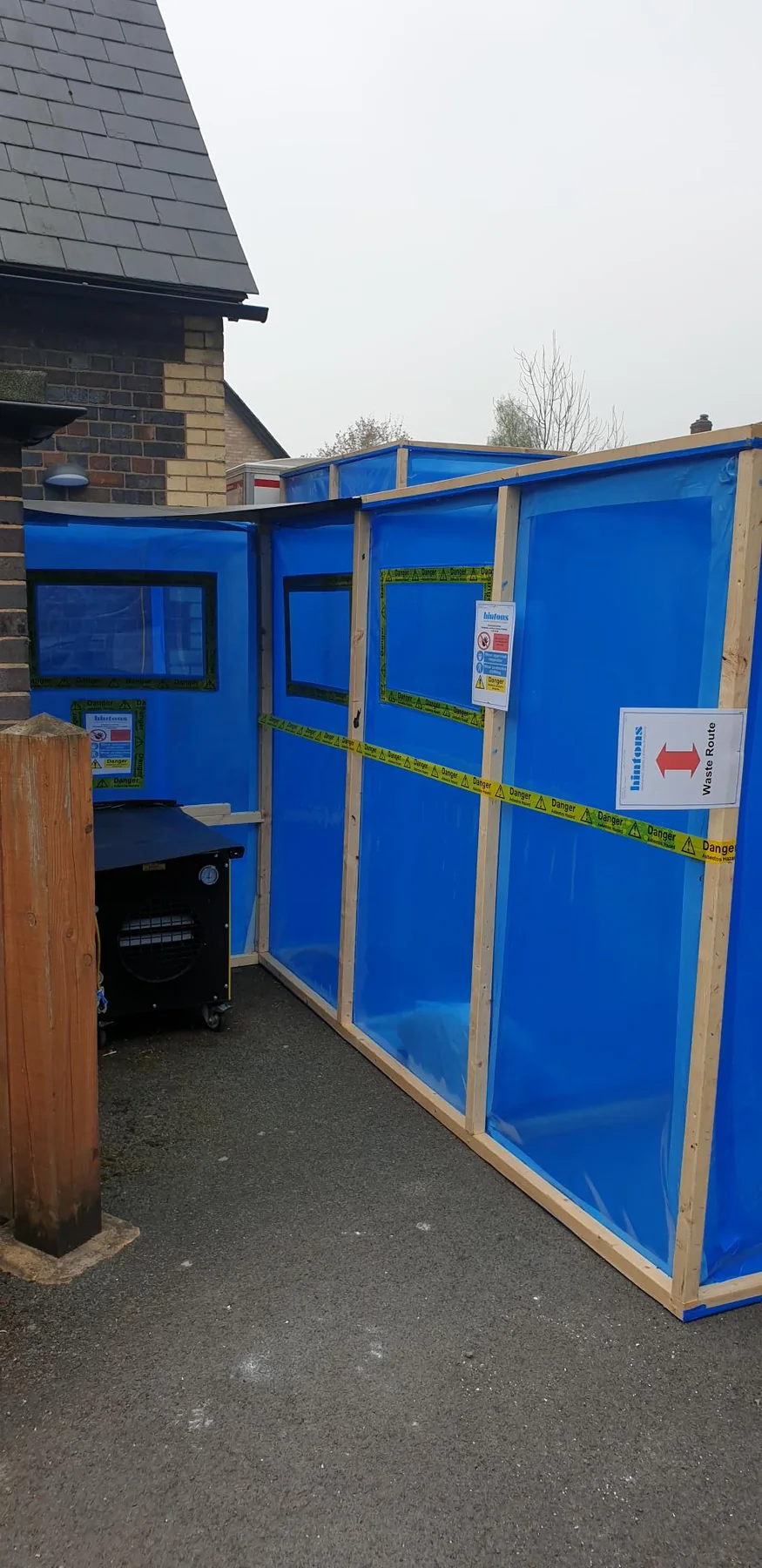
An asbestos enclosure is a controlled work area used for suitable asbestos-removal projects to separate the work from surrounding areas. It is normally formed using polythene sheeting with controlled access arrangements. Depending on the project, negative-pressure equipment and decontamination arrangements can form part of the overall control measures.
What does negative pressure do during asbestos removal?
Negative-pressure equipment is used on suitable enclosed asbestos projects to help maintain inward airflow and reduce the chance of contaminated air escaping from the enclosure. It forms one part of a wider system of controls and must be selected and used to suit the planned work.
What is the four-stage clearance process?
Following relevant licensed asbestos-removal work, an independent analyst carries out a four-stage clearance before the area is returned to normal use. The process includes a preliminary check, a thorough visual inspection, clearance air monitoring and a final assessment after the enclosure has been dismantled. A Certificate for Reoccupation can be issued when the required stages have been completed successfully.
Who carries out the four-stage clearance?
The four-stage clearance is carried out independently of the asbestos-removal contractor by a competent analytical organisation. The removal contractor is responsible for leaving the work area ready for the independent clearance process.
What happens to asbestos waste after removal?
Asbestos waste must be contained, handled, transported and disposed of in accordance with the applicable waste requirements. The packaging and handling arrangements depend on the material and the work. Relevant waste documentation should provide a record of the disposal route.
Do I need an asbestos survey before refurbishment work?
Where refurbishment or intrusive work could disturb the fabric of a building that may contain asbestos, suitable asbestos information is needed before work begins. A refurbishment and demolition survey is intended to locate asbestos-containing materials in the parts of the building that will be affected by the proposed work.
What is the difference between a management survey and a refurbishment and demolition survey?
A management survey is intended to help manage asbestos during the normal occupation and use of a building. A refurbishment and demolition survey is more intrusive and is intended to find asbestos in the areas that will be affected by refurbishment or demolition work. The survey scope should match the work being planned.
Can I send Hintons an existing asbestos survey?
Yes. Send the survey together with any useful photographs, drawings, specifications and programme information. Our estimating team can review the information relevant to the enquiry and advise whether anything further is needed before a quotation can be prepared.
How much does asbestos removal cost?
There is no reliable single price because asbestos projects vary considerably. Cost can be affected by the asbestos material and quantity, condition, access, work category, enclosure and analytical requirements, waste volumes, location, programme and working hours. A survey and clear scope normally allow a more accurate quotation to be prepared.
How long does asbestos removal take?
The programme depends on the amount and type of asbestos, access, site conditions and the controls required. A relatively small non-licensed project may be straightforward, while complex licensed work can require substantial preparation, controlled removal and independent clearance. Each project should be programmed around its own circumstances.
Can asbestos be encapsulated instead of removed?
In suitable circumstances, yes. Encapsulation can form part of an asbestos-management approach where the material is appropriate to remain in place. Its suitability depends on the material, surface condition, location, likelihood of disturbance and future use of the area. Encapsulation does not remove the asbestos, so it still needs to be managed afterwards.
What should I do if asbestos is unexpectedly discovered during building work?
Stop work in the affected area and avoid further disturbance. Restrict access as appropriate and obtain competent advice so the material and the circumstances can be assessed. Existing asbestos information should also be checked before deciding what happens next.
Can Hintons carry out both licensed and non-licensed asbestos work?
Yes. D J Hinton & Co Ltd undertakes licensed asbestos removal and appropriate non-licensed asbestos work. The correct route depends on the asbestos material, its condition and the task being carried out.
Does Hintons work on commercial, industrial and domestic properties?
Yes. Hintons works across commercial, industrial, public-sector and domestic property. Projects range from individual residential requirements to schools, factories, commercial premises, managed estates, refurbishment schemes and complex licensed-removal projects.
Where does D J Hinton & Co Ltd provide asbestos services?
Hintons provides asbestos services across the UK through its office network, with Kidderminster as the head office and regional coverage supported by locations including London, South Wales, North Wales, Doncaster, Gateshead, Mansfield, Basildon and Peterborough.
Useful official asbestos guidance
For regulatory guidance, use the Health and Safety Executive as the primary source. The following official resources are useful starting points:
HSE asbestos information
General guidance on managing and working with asbestos.
VISIT HSE ASBESTOS GUIDANCE →Asbestos Essentials
HSE task guidance for suitable non-licensed asbestos work.
VIEW ASBESTOS ESSENTIALS →Recent asbestos-removal case studies
See how Hintons has planned and delivered genuine asbestos projects in different buildings, materials and locations across the UK.
School Boiler Room Environmental Clean & Encapsulation
One-week environmental clean and encapsulation of a school boiler room in Malvern to address poor and unsafe conditions.
VIEW CASE STUDY →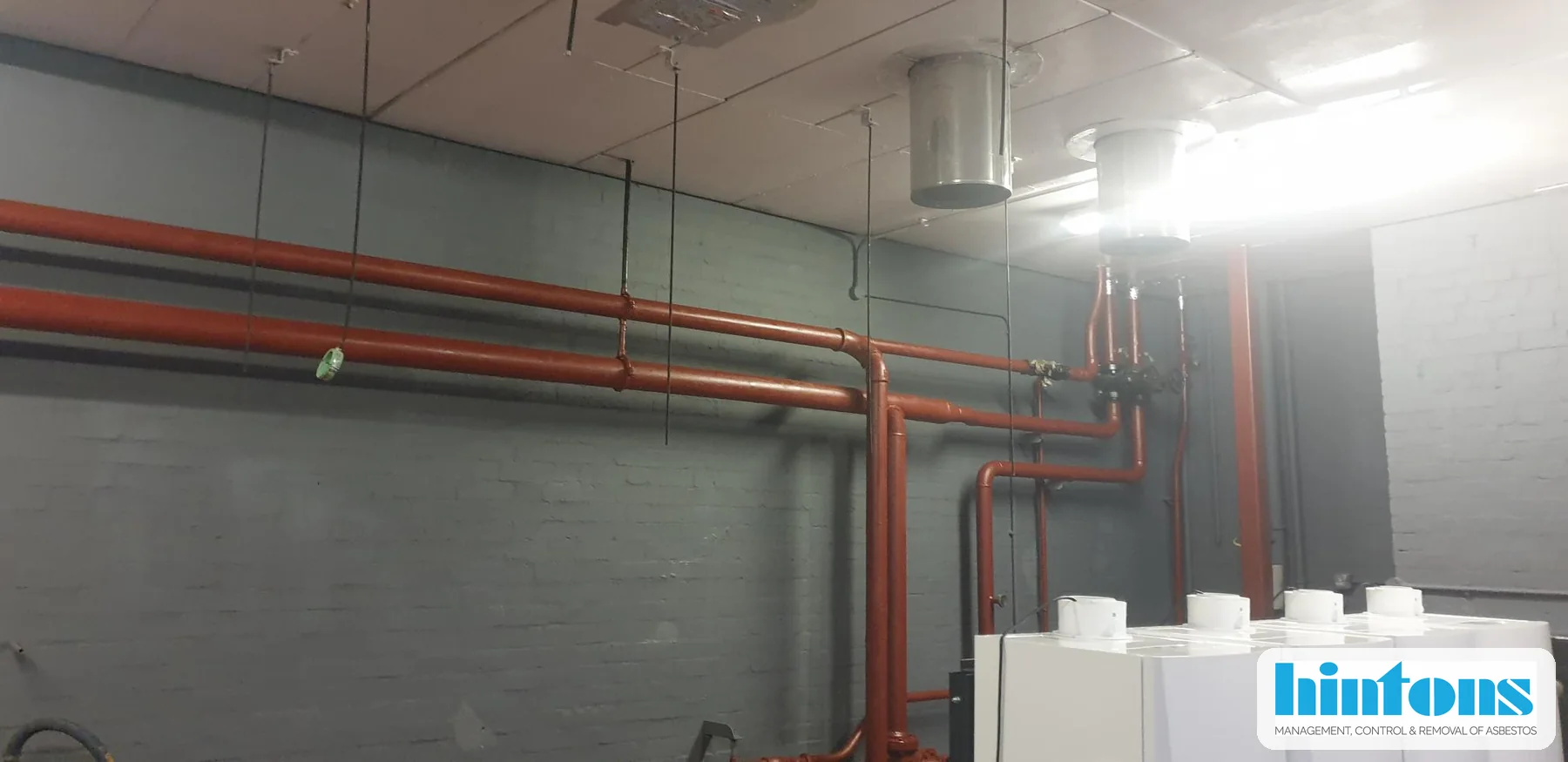
Boiler Room Plant Removal, Environmental Clean & Encapsulation
Ten-day removal of mechanical plant, environmental clean and encapsulation of boiler room walls and pipework in Watford before new plant installation.
VIEW CASE STUDY →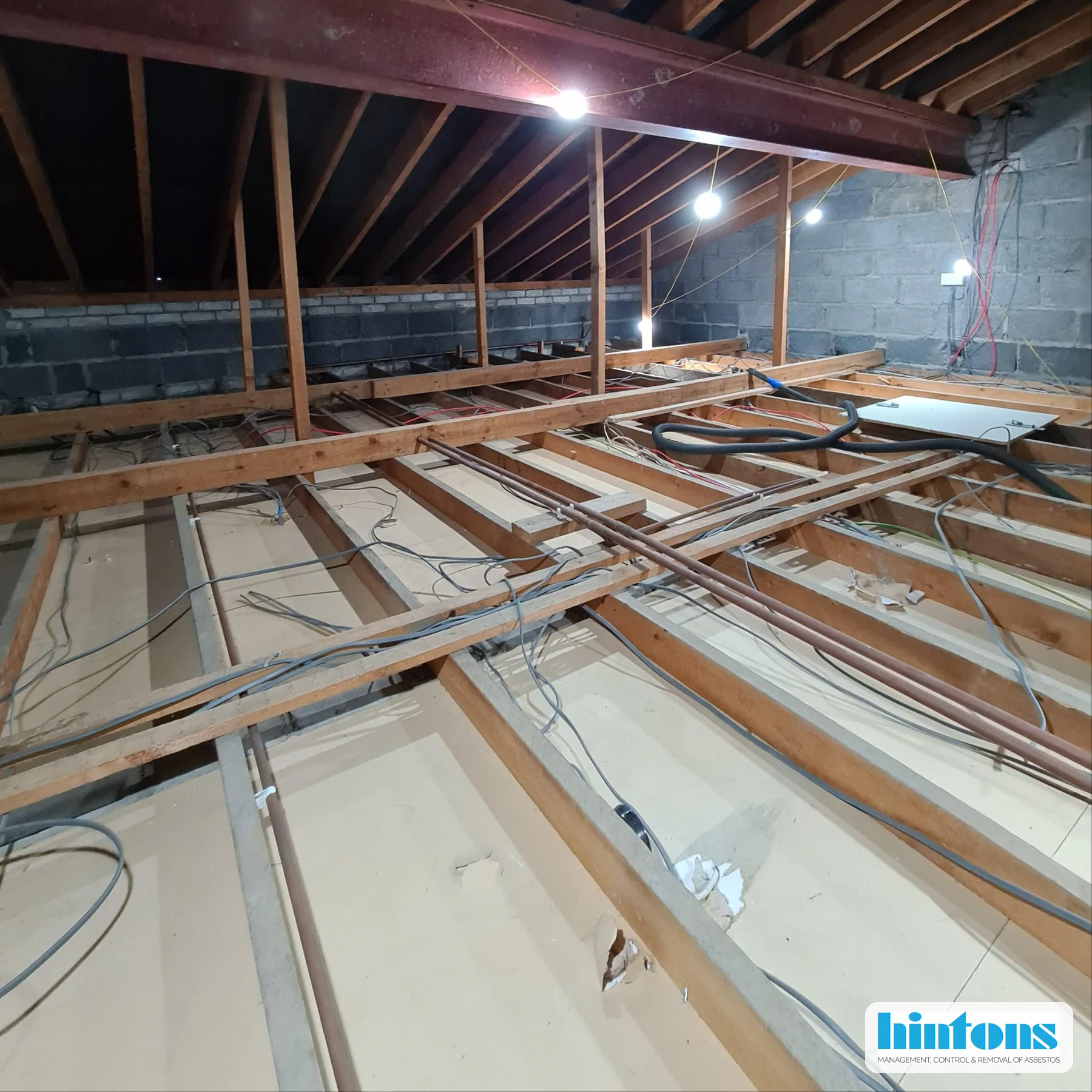
AIB Debris Removal from Community Hall Loft
Five-day AIB debris removal and loft clean at a North Wales community hall to enable new lighting to be installed for the council.
VIEW CASE STUDY →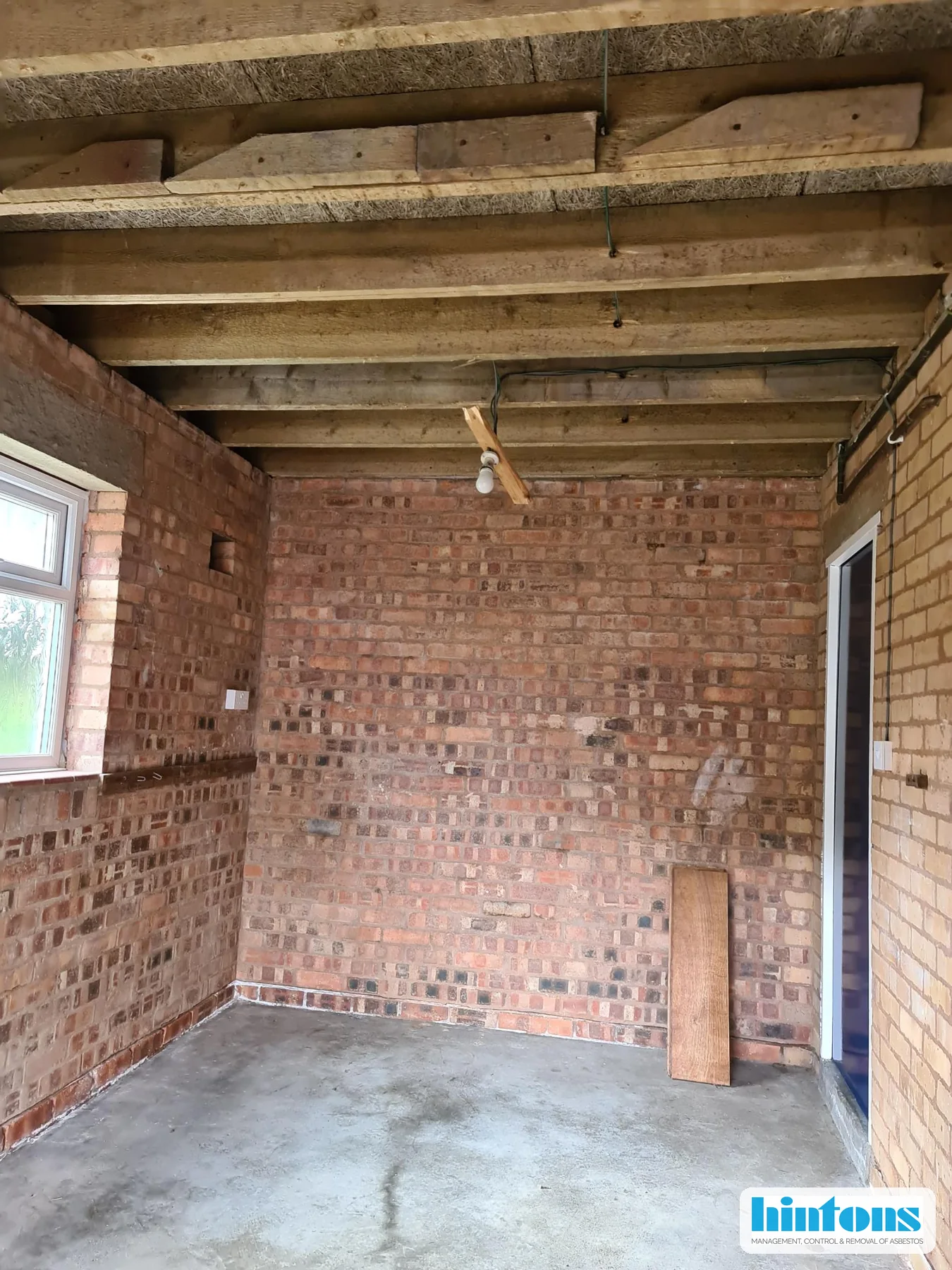
Asbestos Insulation Board Ceiling Removal
Three-day removal of a deteriorated AIB ceiling at a domestic property in Redditch to make the area safe for the owner and their family.
VIEW CASE STUDY →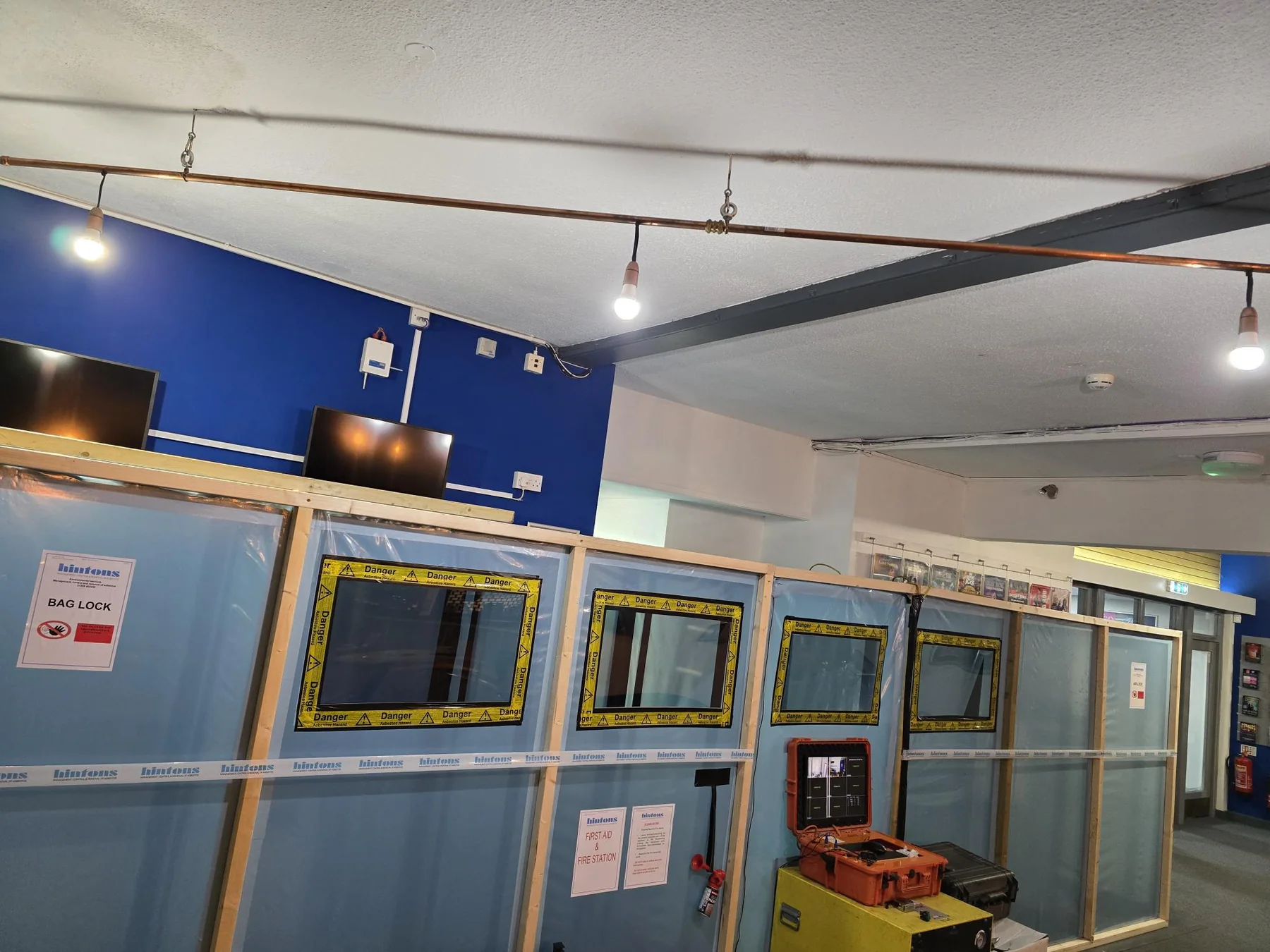
AIB Ceiling Removal from a Theatre
AIB ceiling-panel removal at a Worcestershire theatre over three night shifts, enabling staff to maintain services safely.
VIEW CASE STUDY →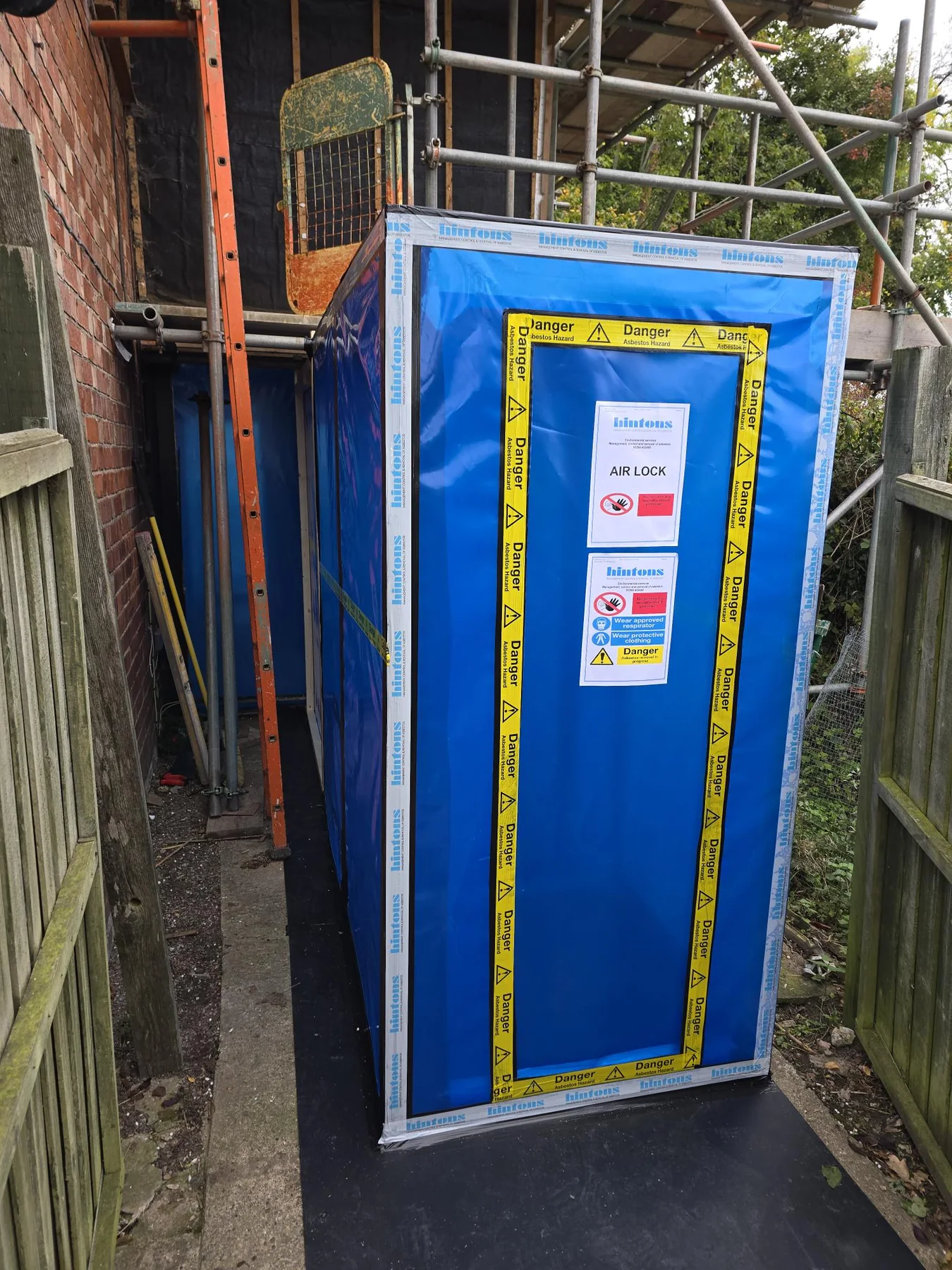
Thermal Insulated Pipework Removal
Three-day removal of asbestos thermal insulation from pipework at a Shrewsbury home to enable a builder to carry out an extension.
VIEW CASE STUDY →Find your nearest Hintons asbestos-removal team
Use the office pages below to see local coverage, office contact details and the towns and cities supported by each Hintons team.
Check the supporting evidence.
Our asbestos licence, ARCA membership and management-system certificates are available on the Accreditations page for clients to review.
VIEW ACCREDITATIONS & CERTIFICATES →